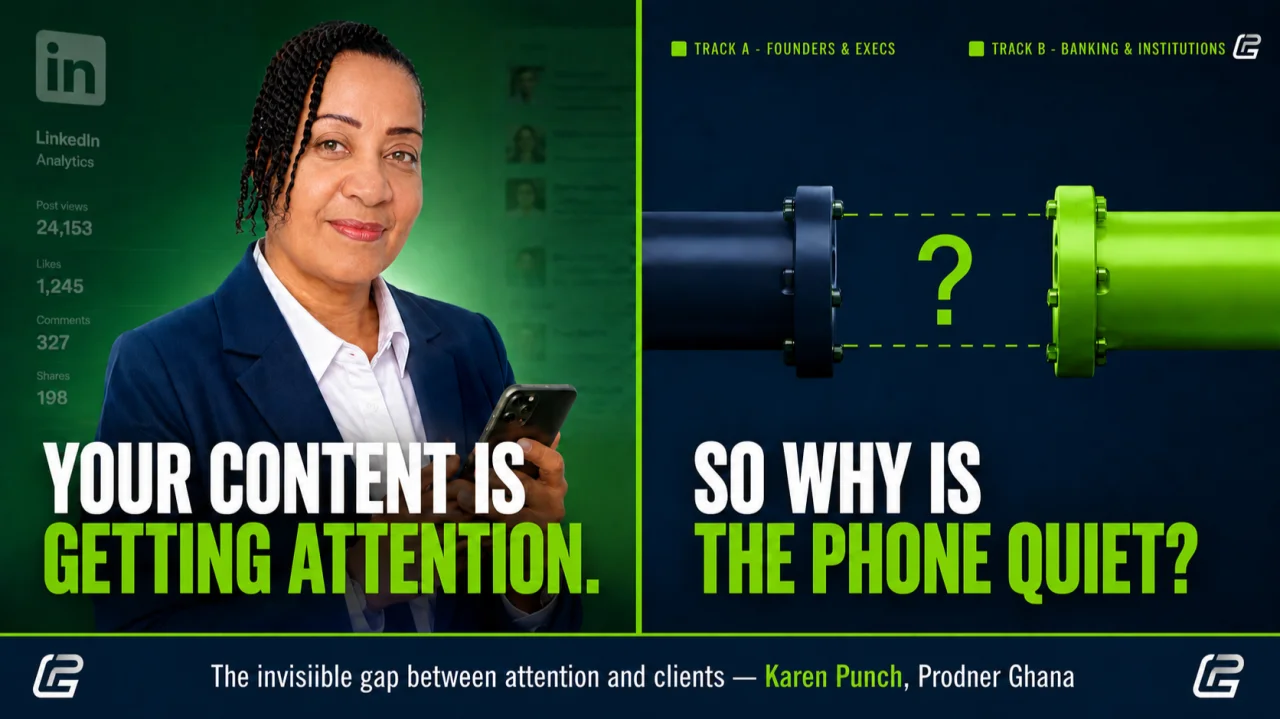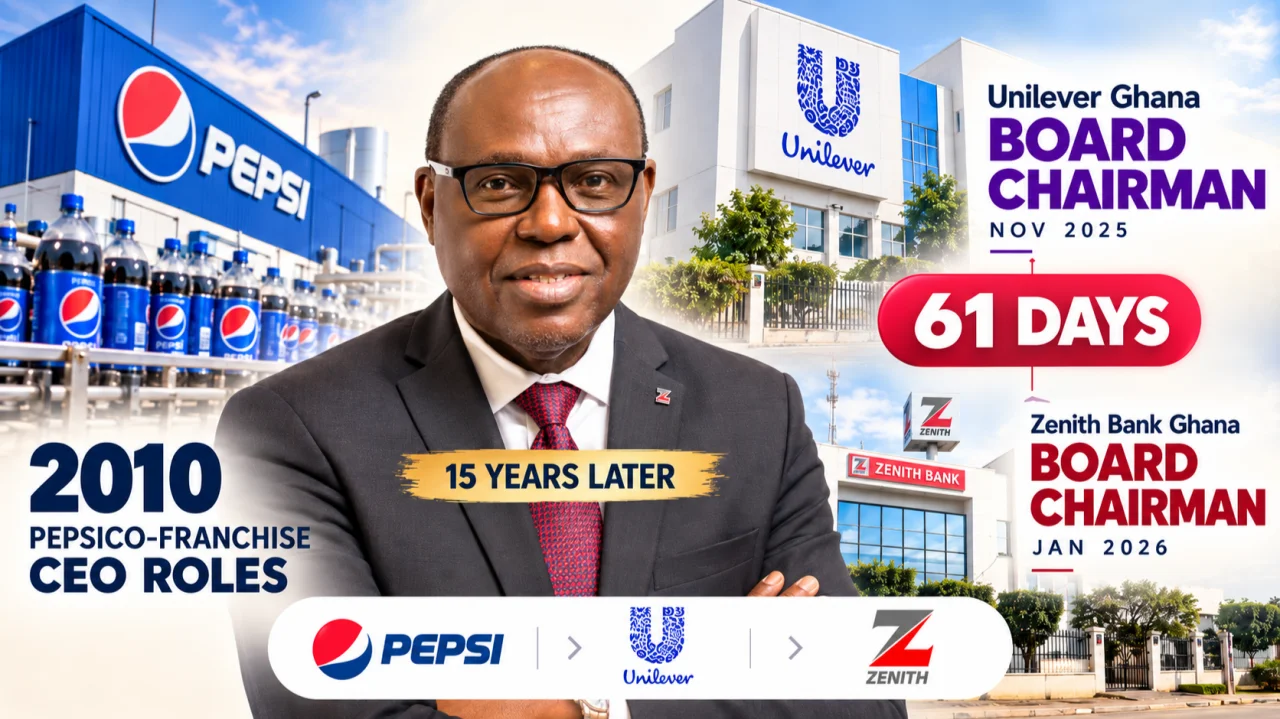

If the only people who know how good you are have already hired you, what happens when they stop referring you?
Sit with that question for a moment before we go any further.
In 35 years of working alongside some of the most capable executives and founders I have ever encountered, that question is the one that eventually finds everyone who built their business entirely on the strength of their work and the warmth of their existing relationships.
At some point, referrals thin out.
The colleague who sent you three clients retires.
The network that felt permanent turns out to have been a season.
And the founder who never built any proof of their excellence outside their existing client relationships discovers, usually at the worst possible time, that the market does not know them at all.
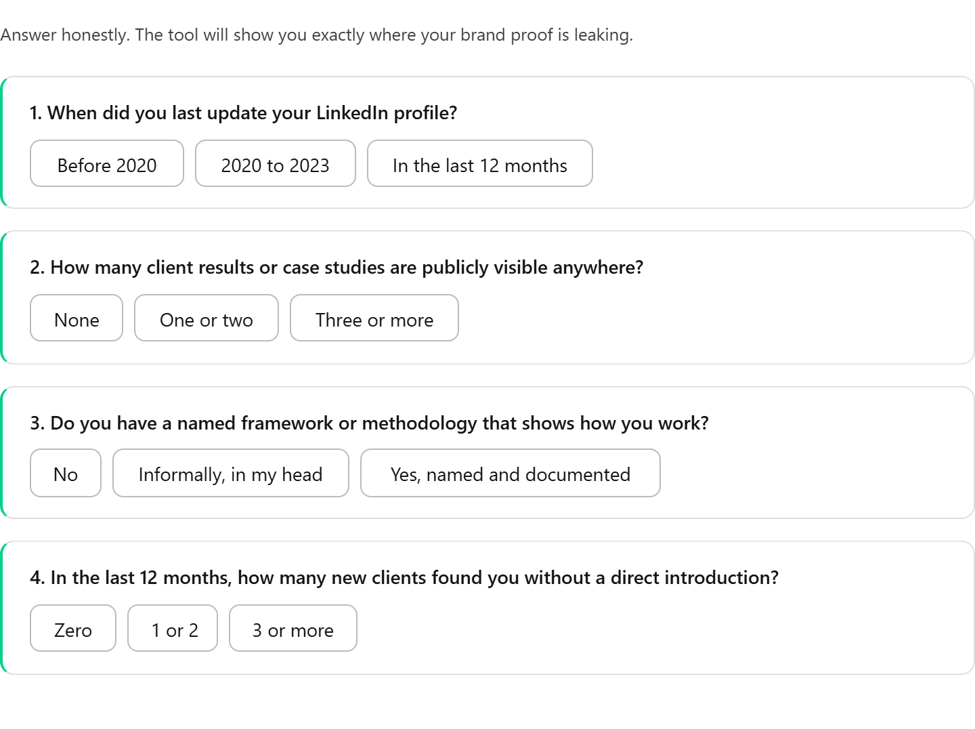
The Invisible Expert
I want to describe someone you might recognize.
Twenty years of experience.
A track record that would make most people in their industry pay attention.
Clients who speak about them with genuine admiration and refer them quietly to colleagues without being asked.
Results that have shaped organizations, saved millions, and changed careers.
Their LinkedIn profile was last updated in 2017.
No case studies published anywhere.
No frameworks named.
No articles written.
No consistent content that shows how they think, what they believe, or what working with them actually produces.
Every new client they have ever won came through someone who already knew them.
For most of their career, that was completely fine.
The referrals were consistent, the work was always there, and the pipeline never felt urgent enough to address.
But something has shifted in the last two years.
The referrals are still coming, just less frequently.
The opportunities that do arrive require more convincing than they used to.
And occasionally, a prospect who was referred to them looks them up before the first call, finds almost nothing, and quietly goes elsewhere.
They never knew about that prospect and they will never know about the next one either.
The expertise is real, the results are real, and the brand that represents both is almost completely invisible to anyone who has not already been told about it by someone who experienced it firsthand.
The Founder Whose Results Live in a Drawer
The second person I want to describe is slightly different.
Seven years of building a business with extraordinary client results.
A manufacturer whose operational costs they reduced by 34% in eighteen months.
A founder they mentored through a funding round that closed at twice the initial target.
A team they restructured that went from 40% turnover to 8% in one year.
None of these results have ever been written down anywhere the public can see.
The results, methodology, and evidence is sitting in emails, in client feedback, and in the measurable outcomes of every engagement they have ever run.
But from the perspective of a potential client doing their due diligence before picking up the phone, there is nothing to see.
The only people who know how good this founder is are the clients who have already paid for the privilege of finding out.
What This Costs You That You Cannot See
The costs of invisible excellence are almost entirely hidden from the person paying them.
You do not receive a notification when a prospect looked at your profile and left.
You do not get an email when a referral considers you and then chooses someone with a more visible track record.
You do not see the shortlist you were not on because the person compiling it had no way of verifying what your existing clients already know.
The market simply moves on without explanation.
And the founder who is excellent but invisible continues doing excellent work, sustaining their business through the relationships they have, and never fully seeing the scale of what they are not winning.
I have sat with enough senior executives and founders over the years to know that this is not a rare situation.
It is the norm for a large portion of the most genuinely capable people I have encountered.
The evidence of that excellence lives entirely inside the relationships of people who already know them and nowhere else.
What the Market Actually Needs to See
Let me be clear about what brand proof means in practice.
A rebrand will not fix this.
A new website will not fix this.
Posting on LinkedIn every day about your philosophy will not fix this on its own.
What fixes this is specific, documented, accessible evidence that allows a stranger who has never met you or anyone who knows you to form a confident impression of your capability before they ever speak to you.
It could be a case study that names the problem, describes the approach, and quantifies the outcome.
It could be a framework you have named and explained that shows how you think.
It could be a piece of writing that demonstrates the depth of your understanding of a specific problem your ideal client faces every Monday morning.
It does not need to be elaborate, but it needs to exist somewhere the right person can find it.
Because here is what the market does when it encounters a stranger.
It looks for proof, searches for signals, and tries to answer the question every buyer asks before they commit:
Has someone like me worked with this person before, and did it work?
If the answer to that question is not visible anywhere, the market moves to someone for whom it is.
What This Means for Your Brand
You might be thinking, "Karen, my clients know how good I am, and they refer me. Why do I need to build public proof?"
Well if you want a dying business then don’t do anything.
Because the clients who know you will not always be in a position to refer you.
Plus, the market will not wait for an introduction.
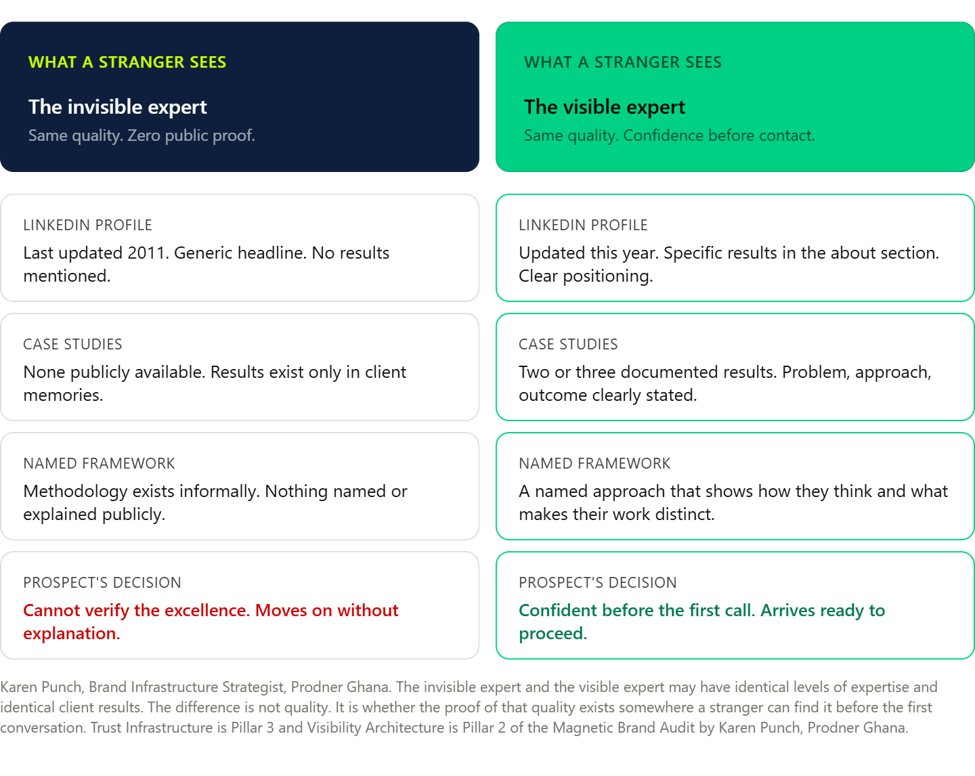
Example 1: The executive with twenty years of experience and a profile from 2017. The fix is choosing three results from the last five years, describing them with enough specificity that a stranger can understand the problem, the approach, and the outcome, and making those results visible in at least one place a prospect would look before calling. That is a trust infrastructure decision, not a content strategy.
Example 2: The founder with extraordinary client results sitting undocumented. The fix is picking one result, the one they are most proud of, describing it the way they would describe it to a colleague over coffee, and putting it somewhere public. One result, described with honesty and specificity, does more for a brand's credibility than ten posts about what the founder believes about leadership.
Trust Infrastructure is Pillar 3 of the Magnetic Brand Audit and Visibility Architecture is Pillar 2.
Together they address exactly this.
Pillar 2 asks whether you are visible where your ideal client is looking.
Pillar 3 asks whether what they find when they look builds confidence before the first conversation or requires them to take your word for it.
Most invisible experts fail both pillars simultaneously.
The visibility is low and the trust signals are thin.
The combination means the market has almost no way of finding them or trusting what it finds.
Reply "Audit" and I'll send it over.
Because the question is not whether you are good enough.
The question is whether the market has any way of knowing that before someone who already knows you tells them.
Talk soon,
Aunty Karen
(Your Favorite)
P.S. The most uncomfortable version of this conversation I have ever had was with a founder who told me, with complete conviction, that their work spoke for itself. I asked them how many new clients had found them in the last twelve months without a direct introduction from someone who already knew them. The answer was zero. The work was speaking quite alright, but nobody outside that circle could hear it.